Get to know our German Shepherds
Isabella German Shepherds
Distinctive color. The whole dog matters.
We raise Isabella German Shepherds at AZ Sunrise Kennel in North Phoenix. Here is a closer look at the genetics behind their color and the everyday commitment behind bringing one home.
View Available Puppies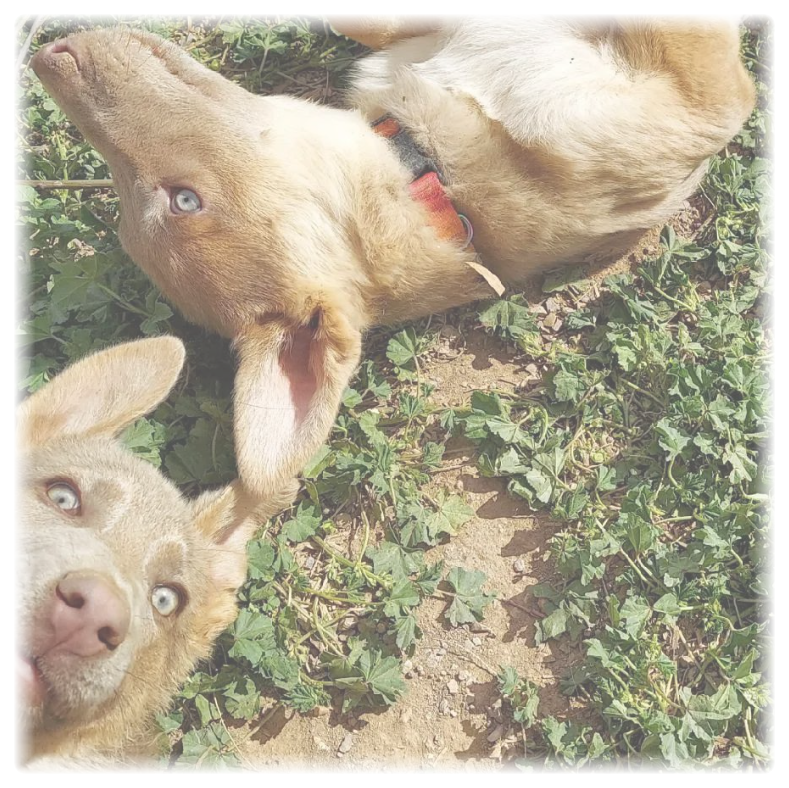
01 / The distinctive coat
What does Isabella mean?
Isabella describes a diluted brown coat color, sometimes called lilac. Rather than the familiar black pigment seen on many German Shepherds, the affected pigment has a softer, pale brown appearance. It is a color description, not a separate breed.
Dogs have two main coat pigments: eumelanin, which starts as black, and pheomelanin, which produces red and yellow tones. Color genes modify those pigments, while other genes influence their distribution. That is why a color name does not describe every marking on a dog. VCA: coat color genetics
We love the distinctive appearance of our Isabella dogs. But when choosing a companion, we encourage you to look beyond color: ask about the individual puppy, its parents, its records, and whether a German Shepherd fits your household.
02 / Behind the color
Brown pigment + dilution
Two genetic locations help explain the Isabella combination. At the B locus, variants in the TYRP1 gene can change black pigment to brown. Two recessive brown copies, written b/b, are needed for this change. A dog carrying one brown copy can pass it on without expressing brown itself. This gene also influences pigment in the nose and foot pads, but does not change red/yellow pigment. UC Davis: brown coat genetics
At the D locus, variants in the MLPH gene dilute pigment. Dilution changes black to blue-gray and brown to a paler shade often called Isabella or lilac. It is recessive: two dilution variants are needed for the dilute appearance. Several variants exist, so a laboratory report is more precise than judging a photograph. UC Davis: dilution genetics
| Color description | What happens to the pigment |
|---|---|
| Black | Neither brown nor dilution changes the black pigment. |
| Liver / brown | Brown pigment without dilution. |
| Blue | Black pigment with dilution. |
| Isabella / lilac | Brown pigment with dilution, commonly summarized as b/b d/d. |
This combines the UC Davis explanations above. It is not a complete prediction of coat pattern or a DNA result for any particular kennel dog.
Can parents carry the color without showing it?
Yes. Recessive variants can be carried without being visible. For dilution alone, each puppy from two carriers has a 25% expected chance of being dilute, not a guaranteed quarter of each litter. Predicting Isabella also requires considering the brown locus and the parents' actual results. UC Davis: dilution genetics
Ask to see the relevant DNA report if a particular genotype matters to you. Color testing answers a color question; it is not a substitute for health screening or documented ancestry.
03 / Life with a Shepherd
More than a beautiful coat
Training and connection
German Shepherds need consistent engagement, not just space to run. Begin with short, rewarding training sessions, a predictable household routine, and positive exposure to new people, sounds, and environments. Build recall, basic manners, and impulse control as the puppy develops. Learning continues well beyond puppyhood. Discuss safe socialization with your veterinarian while vaccinations are in progress. AKC: German Shepherd puppy training
Coat and grooming
Plan for a double coat and shedding. Regular brushing removes loose hair, with extra attention during seasonal shedding. Introduce gentle brushing and nail handling early. Routine shaving is not a solution to shedding or summer heat; the coat provides insulation. Bathing needs depend on the individual dog's activities and skin. AKC: German Shepherd grooming
Living in Arizona
Make fresh water, shade, and a cool place to rest part of your daily plan. Choose cooler times for walks, avoid hot pavement, and never leave a dog in a parked vehicle. Stop activity if your dog struggles with the heat. Heavy panting, weakness, confusion, or collapse require urgent attention; contact a veterinarian immediately if you suspect heatstroke. AVMA: warm-weather pet safety
Before bringing a puppy home, decide who will handle daily training, daytime care, grooming, and veterinary appointments. A beautiful color should be the beginning of your interest, not the only reason for your decision.
04 / Informed puppy choices
Health comes before color
Ask for the records, not just the description
The German Shepherd Dog Club of America identifies hip and elbow evaluations and temperament testing in its CHIC requirements. Ask a breeder which evaluations the parents have completed and request the actual results. Discuss relevant genetic screening, including degenerative myelopathy, with your veterinarian. A color DNA result alone does not answer these health questions. GSDCA: health and genetics
Understanding color dilution alopecia
Color dilution alopecia (CDA) is an inherited condition associated with dilute coats and has been reported in German Shepherds. Signs can include thinning hair, hair loss, flaky skin, itching, or secondary skin infections. Puppies may initially have a normal-looking coat, with signs appearing later.
A dilute coat is not itself a diagnosis. If you notice changes in your dog's skin or coat, have a veterinarian investigate rather than assuming the color is responsible. CDA is not curable, but a veterinarian can help manage associated skin problems. VCA: color dilution alopecia
This guide is educational, not a veterinary assessment of any puppy. Ask us for the records available for the specific dog you are considering, and review health questions with your veterinarian.
05 / Know the distinction
AKC standards and puppy paperwork
The AKC German Shepherd conformation standard favors strong, rich colors and treats blue, liver, and pale or washed-out coloring as serious faults. It also disqualifies dogs whose noses are not predominantly black. Isabella should not be presented as a preferred AKC show-standard color. These are conformation requirements, not a measure of a dog's worth as a companion. AKC: German Shepherd breed standard (PDF)
Do not assume that a color description, a parent's paperwork, and the registration included with a puppy purchase are the same thing. Ask exactly what accompanies the individual puppy and what the agreement permits.
At AZ Sunrise Kennel, our Pet Only option does not include AKC registration. Review the options and prices on the puppy's page and confirm the applicable paperwork with us before reserving. We are happy to walk you through it.
06 / Right here in North Phoenix
Meet our Isabella Shepherds
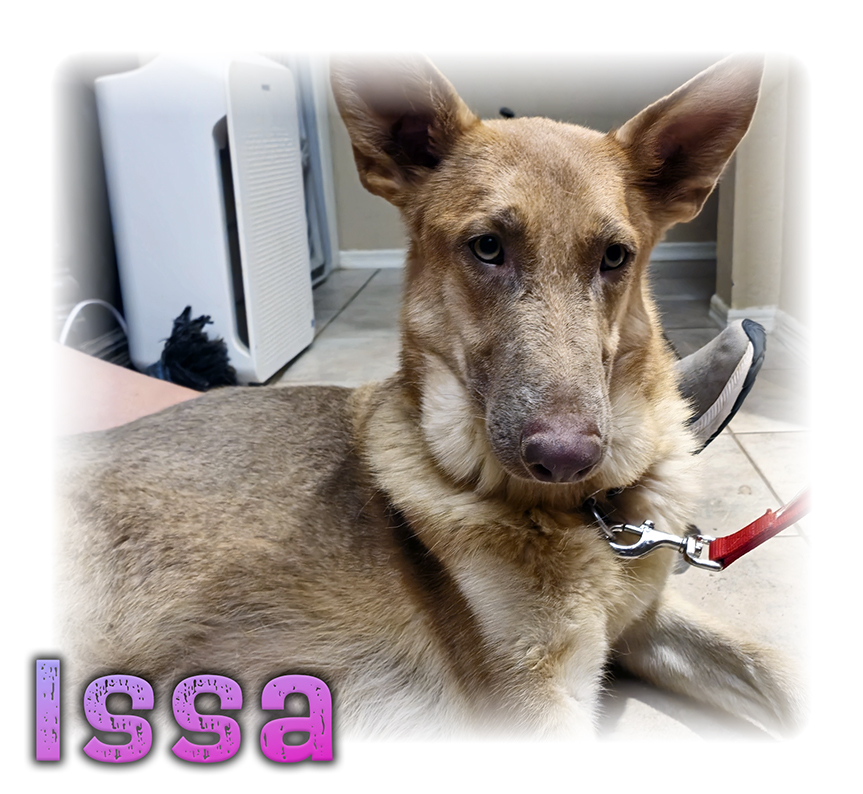
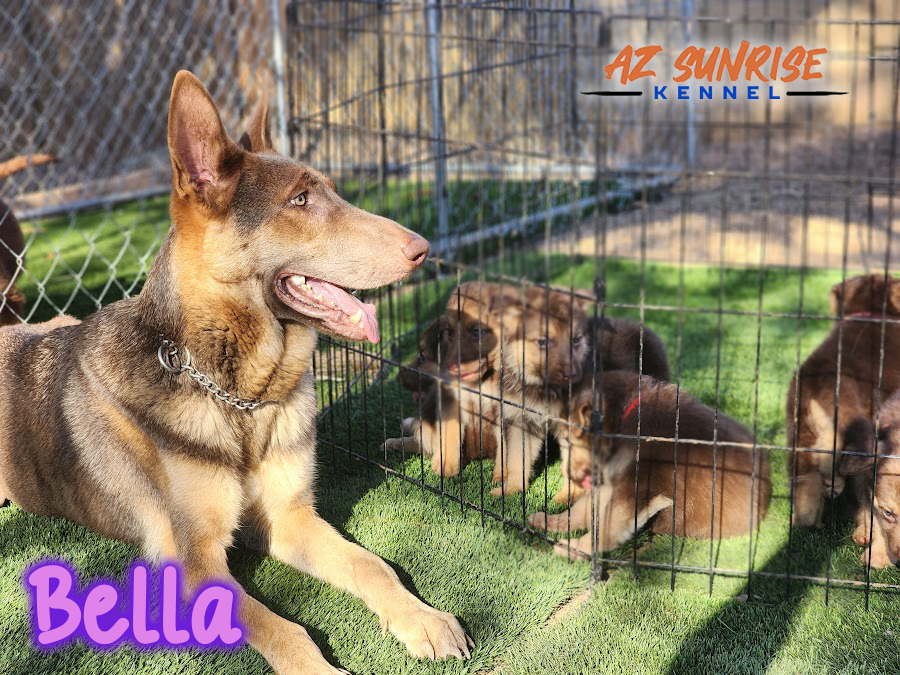
Isabella German Shepherds are part of our program at AZ Sunrise Kennel. Get to know Issa and Bella, explore our current litters, and talk with us about the puppy you have in mind. Availability changes, so our available-puppies page is the place to check current listings.
Questions to bring to your puppy conversation
- Which puppies are available, and what have you noticed about each one's personality?
- What information and health records are available for the parents?
- Which vaccinations, dewormings, and veterinary visits are documented?
- What is the total price, required deposit, and remaining balance?
- What registration, agreement, and pickup paperwork are included?
- What food and routine is the puppy currently used to?
07 / A few more answers
Frequently asked questions
Is Isabella the same as blue?
No. Blue describes diluted black pigment; Isabella describes diluted brown pigment. Both involve dilution, but their pigment background is different. UC Davis: dilution genetics
Is this the rarest German Shepherd color?
We describe Isabella as distinctive rather than assigning it a rarity ranking. We do not have reliable breed-wide population figures to support a claim that it is the rarest. Choose your puppy based on the individual dog and the information behind it, not a scarcity claim.
Does a photograph prove a puppy's genetics?
No. Photographs show appearance, not a laboratory result. Ask for documented testing when a specific genotype is important. The genetics section above explains the difference between carrying a variant and expressing the color.
How do I find an Isabella puppy here?
Visit our available puppies, open a litter, and review its individual puppy profiles. Contact us to confirm color, availability, pricing, and the best fit for your family. A photo of one of our adult dogs does not mean that a particular puppy is currently available.
Keep learning
Explore the veterinary, genetics, and breed-organization references used in this guide.
- UC Davis: brown coat genetics
- UC Davis: dilution genetics
- VCA: coat color genetics
- VCA: color dilution alopecia
- AKC: German Shepherd breed standard (PDF)
- AKC: German Shepherd puppy training
- AKC: German Shepherd grooming
- GSDCA: health and genetics
- AVMA: warm-weather pet safety